
Sciatica vs. Piriformis Syndrome: How Physiotherapy Can Help
Have you ever felt pain that starts in your lower back or hip and travels down your leg? It can feel challenging to identify what’s actually causing it. Many people think this type of pain must be sciatica. But sometimes, the real cause is a condition called piriformis syndrome. These two pain conditions can feel very similar, yet they come from different problems in your body. Understanding the difference matters because it changes how you should treat it. This blog will help you learn the key differences and explain how physiotherapy can help you feel better without risking the wrong treatment.
Whether you are a worker on your feet all day, someone who sits for long hours, or an athlete, this information will help you understand your pain and find the right solution.
What Is Sciatica?
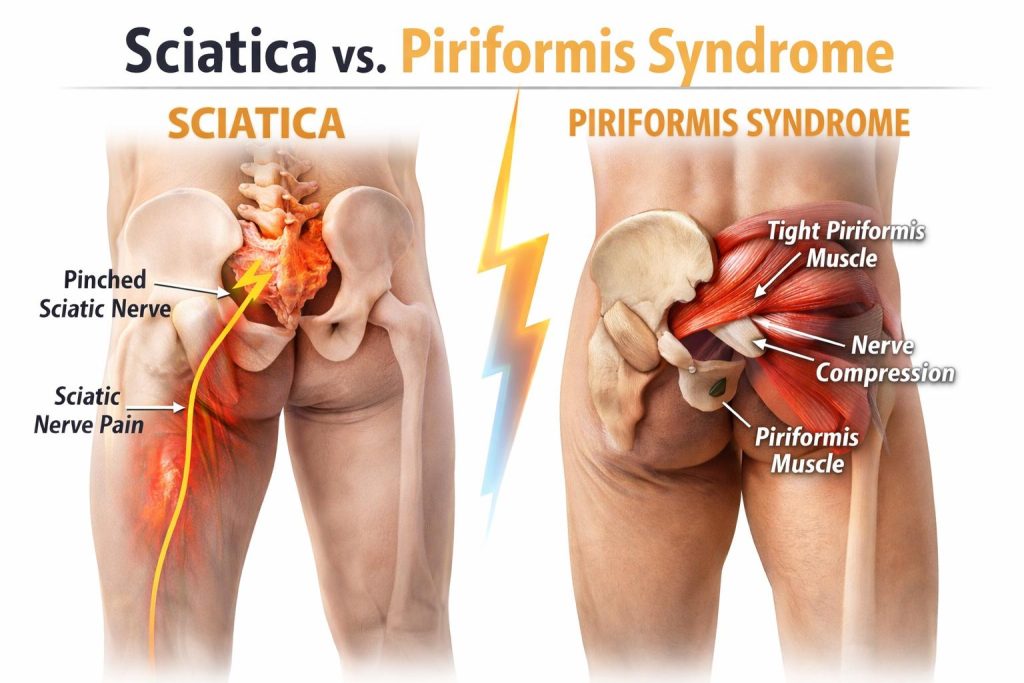
Sciatica is not a diagnosis by itself. It is a set of symptoms that happen when the sciatic nerve gets irritated or compressed. The sciatic nerve is the longest in the body. It starts in the lower spine, travels through the buttocks, and goes down the back of each leg.
When this nerve becomes pinched, you may feel:
- Pain in your lower back, hip, or buttocks
- A sharp or burning pain that travels down one leg
- Numbness, tingling, or weakness in the leg
Sciatica most often happens because a disc in your spine bulges or slips and pushes on the nerve. This is called a herniated disc. Other causes can include spinal stenosis (narrowing of the spinal canal) or other structural problems in the spine.
What Is Piriformis Syndrome?
The piriformis is a small muscle located deep in the buttocks, right over the sciatic nerve. Its job is to help rotate your hip and leg outward. Sometimes this muscle gets tight or goes into a spasm. When it does, it can press on the sciatic nerve.
When this nerve gets pressed by the piriformis muscle, we call it piriformis syndrome. This condition can cause:
- Deep buttock pain
- A shooting pain is felt along the back of the leg.
- Tingling or numbness in the leg, in some cases
The pain in piriformis syndrome can feel very much like sciatica, and that is what makes it confusing without proper assessment.
How Are the Two Conditions Different?
| Feature | Sciatica | Piriformis Syndrome |
| Primary Source | Sciatic nerve irritation from the spine | Sciatic nerve compression by the piriformis muscle |
| Common Cause | Herniated disc, spinal stenosis | Tight or spasm piriformis muscle |
| Pain Location | Lower back, buttocks, down leg | Deep buttock pain may travel down the leg |
| Numbness/Tingling | Common | Possible, less frequent |
| Onset Patterns | May worsen with bending or lifting | Often worse with sitting or hip movement |
| Best Initial Test | Spine assessment | Muscle and nerve tension tests |
Why Correct Diagnosis Matters
If you treat the wrong condition, you can slow down your recovery. For example, if someone has piriformis syndrome but thinks it is sciatica, they may focus on spinal treatments that do not help the muscle causing the pain. This can lead to frustration, wasted time, ongoing pain, and even incorrect exercises that make the problem worse.
Getting the right diagnosis early means:
- Faster pain relief
- Better recovery outcomes
- Less risk of injury from wrong exercises
- A clear road map toward healing
How Physiotherapy Helps
Physiotherapy plays a key role in treating both sciatica and piriformis syndrome. A physiotherapist can:
Accurate Assessment
Your therapist will perform a thorough assessment, including posture, movement, strength, and nerve tension tests. This helps identify whether the problem is spinal or muscular.
Tailored Treatment Plans
Based on the assessment, your physiotherapist will create a personal treatment plan. This can include:
For Sciatica:
- Gentle spinal mobilizations
- Nerve gliding exercises
- Core stability training
- Posture and body mechanics education
For Piriformis Syndrome:
- Soft tissue release and massage
- Stretching the piriformis muscle
- Strengthening exercises for hip muscles
- Movement retraining to reduce muscle tension
Pain Management
Physiotherapy includes pain relief strategies such as heat/ice, manual therapy, and safe movement progressions to reduce discomfort and improve mobility.
Preventing Recurrence
You will learn strategies to prevent the pain from coming back. This includes proper posture guidance, activity modification, and exercises you can do at home.
When Should You Seek Help?
You should consider seeing a physiotherapist if:
- Pain lasts more than a few days
- Pain is limiting your daily activities
- Symptoms travel down your leg
- You have numbness or weakness
- You are unsure of the cause
Early help means quicker improvements and less time in pain.
Conclusion
Sciatica and piriformis syndrome can feel almost the same, but they start from different problems in the body. Treating the wrong condition can slow your recovery and keep your pain going longer than it should. That is why proper assessment is so important.
Physiotherapy provides a safe and effective way to identify the true cause of your pain and guide you toward the right treatment plan. Whether your symptoms come from spinal nerve irritation or a tight piriformis muscle, the right exercises and hands-on care can help restore movement and reduce discomfort.
If you are living in Surrey and dealing with lower back, hip, or leg pain, the team at Vital Physiotherapy is here to help. With the right support, lasting relief is possible.
Frequently Asked Questions (FAQs)
It can be hard to tell on your own because both conditions cause pain that travels down the leg. Sciatica usually starts in the lower spine due to nerve compression, while piriformis syndrome typically starts with a tight muscle in the buttock that presses on the sciatic nerve. A physiotherapy assessment is the best way to find the exact cause of your pain.
Piriformis syndrome does not turn into sciatica, but it can irritate the sciatic nerve and cause similar symptoms. The pain may feel like true sciatica, but the source is muscular rather than spinal. Proper diagnosis is necessary to choose the right treatment.
The fastest relief usually comes from guided physiotherapy treatment. This may include specific exercises, nerve glides, manual therapy, and posture correction. Rest alone is not always enough. Early treatment can safely reduce inflammation and improve mobility.
Yes, gentle walking is often helpful because it keeps the body moving and improves blood flow. However, if walking increases your pain significantly, you should stop and consult a physiotherapist. A professional can guide you on safe activity levels.